
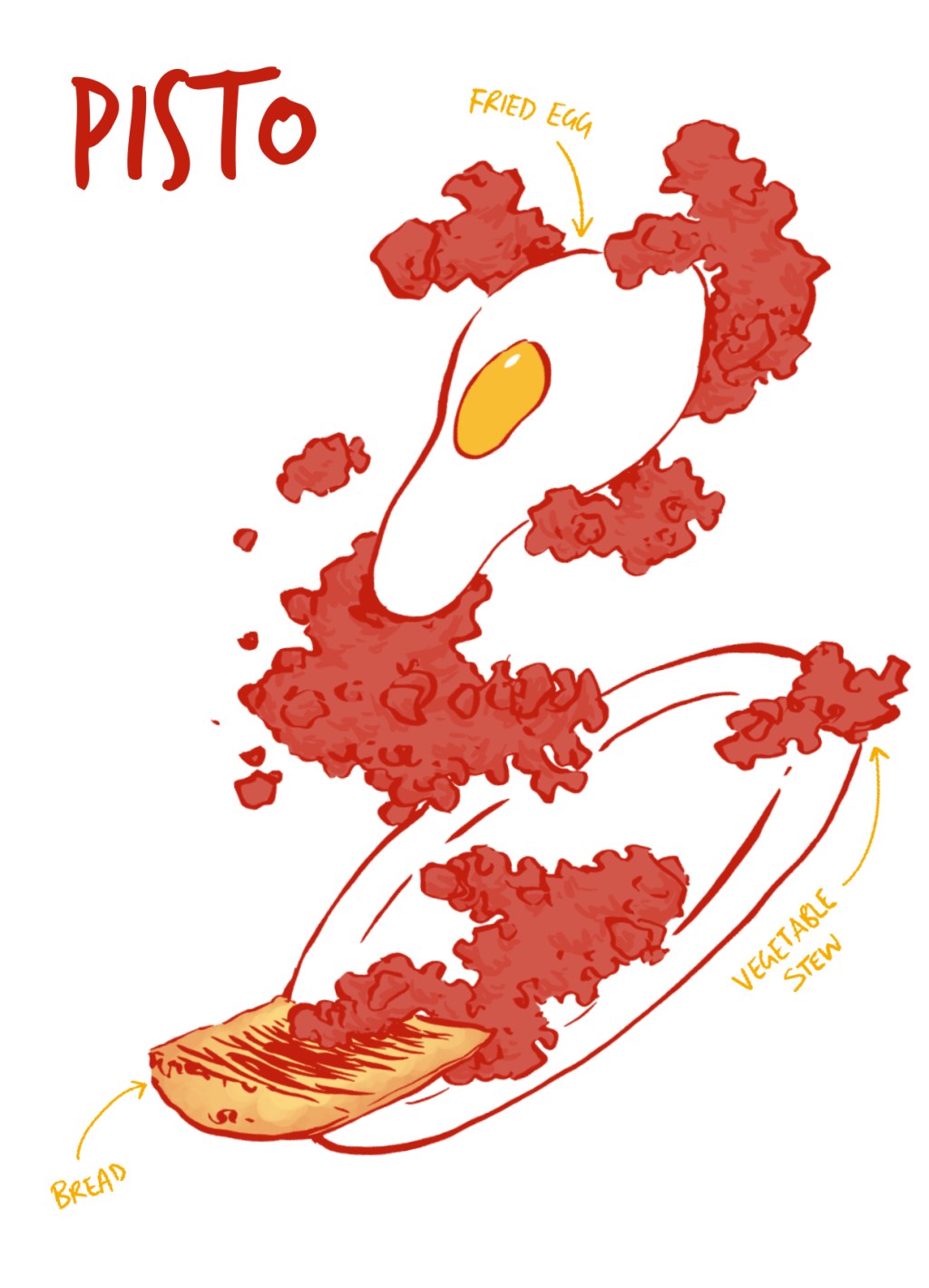
Pisto, a humble and heartwarming vegetable stew originating from Spain, is a beloved dish that celebrates the rich flavours of seasonal produce. Hailing from the region of La Mancha, pisto is often referred to as the Spanish version of ratatouille due to its similar ingredients and preparation method. However, pisto stands on its own as a flavourful and comforting delicacy that has become a staple in Spanish cuisine. The dish’s origins can be traced back to the rural communities of La Mancha, where farmers and villagers would gather fresh vegetables from their gardens and create this hearty stew to sustain themselves through the seasons.
At the heart of pisto lies an assortment of fresh and vibrant vegetables, including tomatoes, bell peppers, onions, zucchini, and eggplant. These vegetables are chopped into small pieces, allowing them to meld together and form a harmonious medley of flavours as they slowly cook together in a pot.
The first step in making pisto is to sauté the onions in olive oil until they become soft and translucent, creating a flavourful base for the stew. The rest of the vegetables are then added to the pot and gently cooked until they soften and release their natural juices.
The key to pisto’s delightful taste lies in the simplicity of its ingredients and the slow-cooking process, which allows the flavours to intensify and meld together over time. As the vegetables simmer, they release their natural sweetness and aromas, creating a comforting and inviting fragrance that fills the kitchen.
Pisto is often seasoned with a pinch of salt and a sprinkle of sugar, which helps to enhance the natural flavours of the vegetables and balance out any acidity from the tomatoes. Some recipes may also include garlic, herbs like oregano or thyme, or a touch of paprika to add an extra layer of depth to the stew.
While pisto is delicious on its own, it is often served as a side dish or accompanied by a poached or fried egg on top. The creamy yolk of the egg adds a luscious and velvety texture to the already comforting stew, creating a delightful contrast of flavours and textures.
Pisto’s popularity has extended beyond La Mancha and Spain’s borders, with variations of the dish appearing in cuisines around the world. In Italy, a similar dish called caponata is enjoyed, while in the Middle East, a stew called shakshuka shares similar ingredients and preparation techniques.
In Spain, pisto is a versatile dish that can be enjoyed at any time of the day. It is often served as a light lunch or dinner, accompanied by crusty bread or rice. Pisto is also a popular filling for empanadas, a savoury pastry, or as a topping for tostas, a type of open-faced sandwich.
Beyond its delicious taste, pisto holds cultural significance in Spain, particularly in La Mancha, where it is celebrated as a symbol of local identity and culinary heritage. The dish’s connection to the land and its reliance on seasonal produce reflect the traditional agricultural practices of the region.
In conclusion, pisto is a delightful and comforting vegetable stew that celebrates the flavours of fresh and seasonal produce. Its origins in the rural communities of La Mancha and its slow-cooking method highlight the art of creating flavourful and nourishing dishes with simple ingredients. Whether enjoyed as a side dish, a main course, or a filling for pastries, pisto invites us to savour the magic of rustic and soulful cooking that connects us to the bounty of the earth and the traditions of the past. As pisto continues to bring joy and warmth to tables around the world, it stands as a testament to the enduring appeal of timeless recipes and the pleasure of savouring the bountiful flavours of the harvest.
To learn more about Pisto and other delicious Spanish foods then you can read all about them in my Spanish Floaty Food Guide here
 Nathan Hillustration