
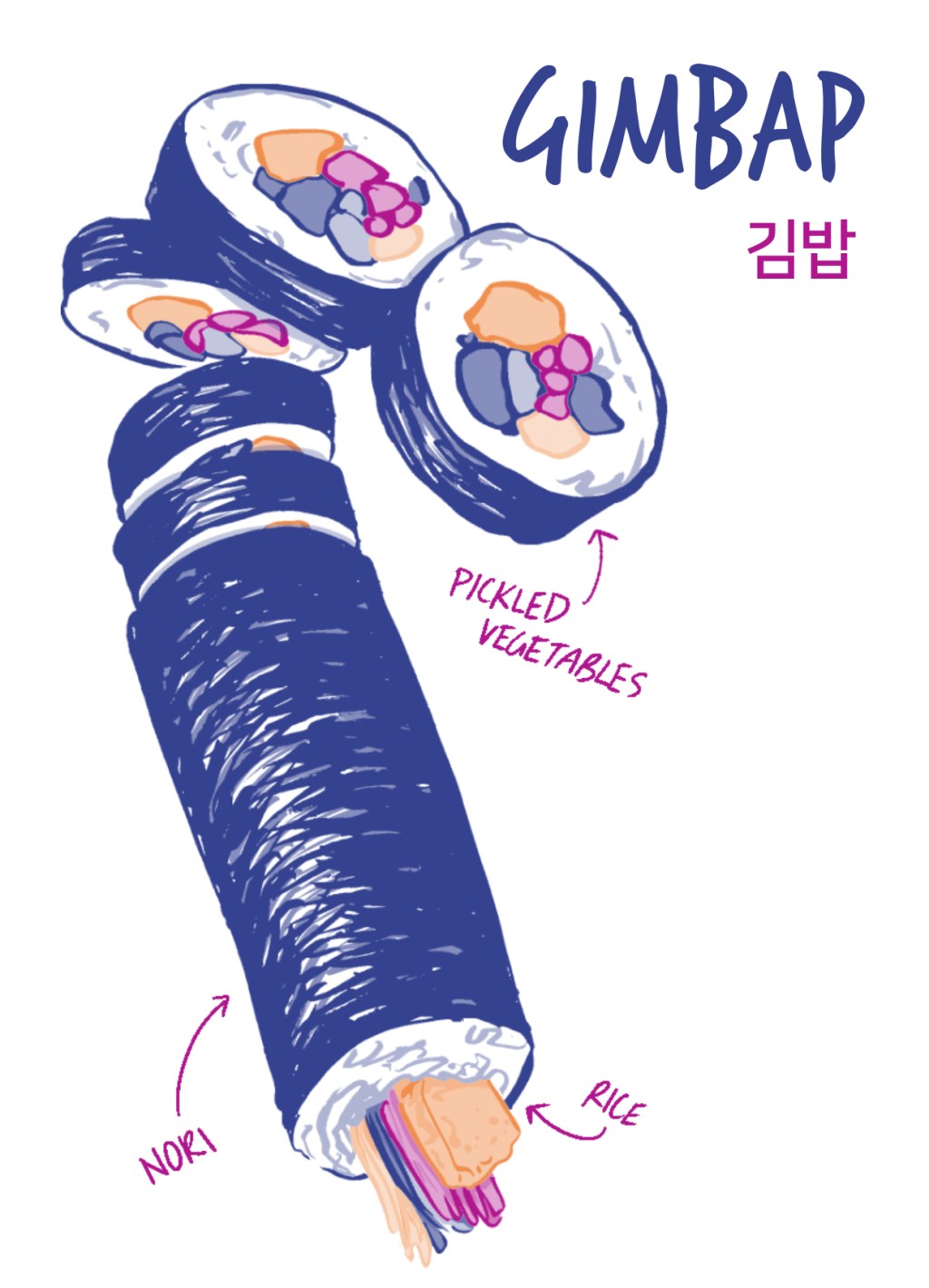
Gimbap, a beloved and iconic Korean dish, is a delightful and versatile treat that reflects the creativity and ingenuity of Korean cuisine. Translating to “seaweed rice roll,” gimbap is a popular snack and meal enjoyed by people of all ages in Korea. Inspired by the Japanese dish “makizushi,” gimbap has evolved into a unique culinary creation that holds a special place in Korean culture and hearts. The dish features a combination of cooked rice, various fillings, and seaweed (gim) carefully rolled into a cylinder and sliced into bite-sized pieces. With its beautiful presentation and delightful flavours, gimbap has become a staple in Korean households, picnics, school lunches, and street food stalls, making it an essential part of Korean culinary heritage.
At the core of gimbap lies the seasoned rice, which serves as the foundation of the dish. The rice is cooked and gently seasoned with sesame oil, salt, and sometimes a touch of sugar, imparting a delicate yet flavourful taste. The texture of the rice is crucial, as it must be slightly sticky to hold the fillings together while remaining tender and fluffy.
The variety of fillings in gimbap is extensive, allowing for a wide range of flavour combinations. Classic fillings often include Korean pickled radish (danmuji), cooked spinach, carrots, egg strips, and canned tuna. However, gimbap is incredibly adaptable, and creative cooks can add their preferred ingredients, such as bulgogi (marinated beef), kimchi, crab sticks, or cheese. This versatility makes each roll a unique culinary creation, tailored to individual tastes.
The assembly of gimbap is an art in itself, as the ingredients are carefully laid out on a sheet of roasted seaweed (gim), which is then rolled into a cylindrical shape using a bamboo mat (makisu). The process requires skill and precision to ensure that the fillings are evenly distributed and the roll maintains its integrity. Once rolled, gimbap is sliced into bite-sized pieces, revealing the beautiful cross-section of colourful fillings surrounded by the dark green seaweed.
Gimbap is more than just a delicious snack; it embodies the spirit of Korean culture and hospitality. It is often prepared in large quantities for gatherings and celebrations, showcasing the importance of communal dining in Korean society. Gimbap is also a favourite lunchbox item, with parents lovingly preparing it for their children’s school lunches, filling it with love and care.
Internationally, gimbap has gained popularity as Korean cuisine enjoys global recognition. Korean restaurants and food festivals around the world proudly serve this delectable dish, introducing people from diverse backgrounds to the delightful flavours and cultural significance of gimbap. As diners experience the satisfying combination of tender rice, flavourful fillings, and the subtle taste of seaweed, they gain a deeper appreciation for Korean culinary traditions and the artistry of gimbap-making.
Moreover, gimbap’s nutritional benefits contribute to its popularity as a wholesome and satisfying dish. The combination of rice and a variety of vegetables provides a balanced mix of carbohydrates, vitamins, and minerals, making gimbap not only a delightful treat but also a nourishing addition to the dining table.
In conclusion, gimbap is far more than just a seaweed rice roll; it is a celebration of Korean culinary artistry and the joy of communal dining. Its tender rice, flavourful fillings, and the subtle taste of seaweed create a culinary symphony that captivates the senses and brings people together. Whether enjoyed as a snack, a meal, or a picnic treat, gimbap embodies the essence of Korean cuisine—a celebration of flavours, culture, and the joy of sharing delectable meals. As diners savour the delightful and colourful bites of gimbap, they partake in a timeless story—a story of culinary creativity, togetherness, and the enduring spirit of Korean cuisine.
To learn more about Gimbap and other delicious Korean foods then you can read all about them in my Korean Floaty Food Guide here
 Nathan Hillustration