
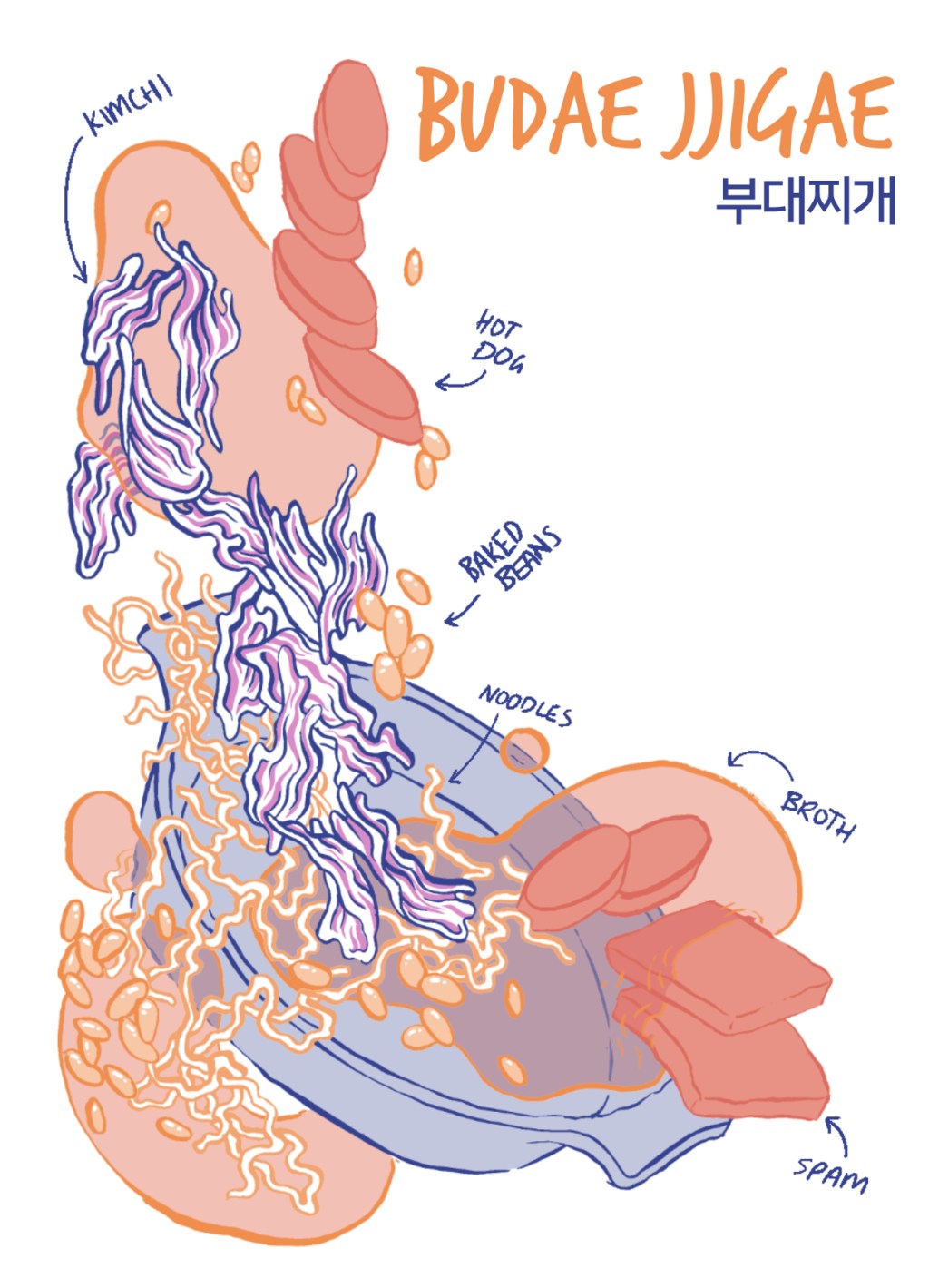
Budae jjigae, often referred to as “Army Stew,” is a unique and iconic dish that encapsulates the fusion of Korean and American culinary influences. This hearty and flavourful stew emerged in South Korea during the aftermath of the Korean War when the country faced economic hardship and food scarcity. In this challenging period, locals creatively combined surplus military rations, such as spam, hot dogs, and canned beans, with traditional Korean ingredients, including kimchi, tofu, and gochujang (Korean chili paste), to create a meal that would sustain them during difficult times.
At its core, budae jjigae is a reflection of the resourcefulness and resilience of the Korean people, transforming humble ingredients into a rich and comforting stew. The dish typically starts with a savoury broth, often made from anchovies, kelp, and other umami-rich ingredients. The assortment of American-inspired ingredients, such as spam and hot dogs, brings a unique and unexpected twist to the traditional Korean flavours.
Kimchi, a staple of Korean cuisine, is a crucial component of budae jjigae, adding a tangy and spicy kick that complements the other ingredients. The inclusion of gochujang infuses the stew with a bold and vibrant spiciness, giving budae jjigae its distinctive flavour profile.
Budae jjigae’s evolution and popularity extend far beyond its wartime origins. As South Korea rebuilt and prospered, the stew remained a beloved comfort food and an integral part of Korean dining culture. Today, it is widely enjoyed across the country, from bustling street food stalls to cozy family restaurants.
The communal aspect of budae jjigae is another highlight of the dish, as it is often enjoyed in group settings. Friends and family gather around a bubbling pot of stew placed in the centre of the table, dipping in chopsticks to retrieve tender morsels of meat, vegetables, and noodles. This shared experience fosters a sense of togetherness and warmth, mirroring the spirit of camaraderie and resilience that gave birth to the dish.
As budae jjigae’s popularity has grown, modern variations have emerged, reflecting the changing tastes and preferences of diners. Some versions incorporate additional ingredients, such as cheese, ramen noodles, or seafood, to add even more depth and complexity to the stew. However, no matter the variations, the essence of budae jjigae remains grounded in its history and the celebration of resourcefulness and community.
Internationally, budae jjigae has garnered attention as a unique and flavourful representation of Korean cuisine. Korean restaurants around the world proudly serve this comforting stew, introducing global diners to the delightful blend of American and Korean flavours. With its diverse textures, bold tastes, and heartwarming history, budae jjigae has become a symbol of Korean resilience and creativity that resonates with people from all walks of life.
In conclusion, budae jjigae is far more than just a stew; it is a living testament to the indomitable spirit of the Korean people and their ability to find solace and sustenance amidst adversity. From its humble beginnings as a wartime creation to its status as a beloved comfort food and international culinary sensation, budae jjigae’s journey is a reflection of Korea’s rich history and culinary ingenuity. As diners savour the flavourful broth, savoury meats, and tangy kimchi in every spoonful, they also partake in the enduring story of budae jjigae—a story of resilience, community, and the celebration of life’s simplest and most cherished pleasures.
To learn more about Budae Jjigae and other delicious Korean foods then you can read all about them in my Korean Floaty Food Guide here
 Nathan Hillustration