
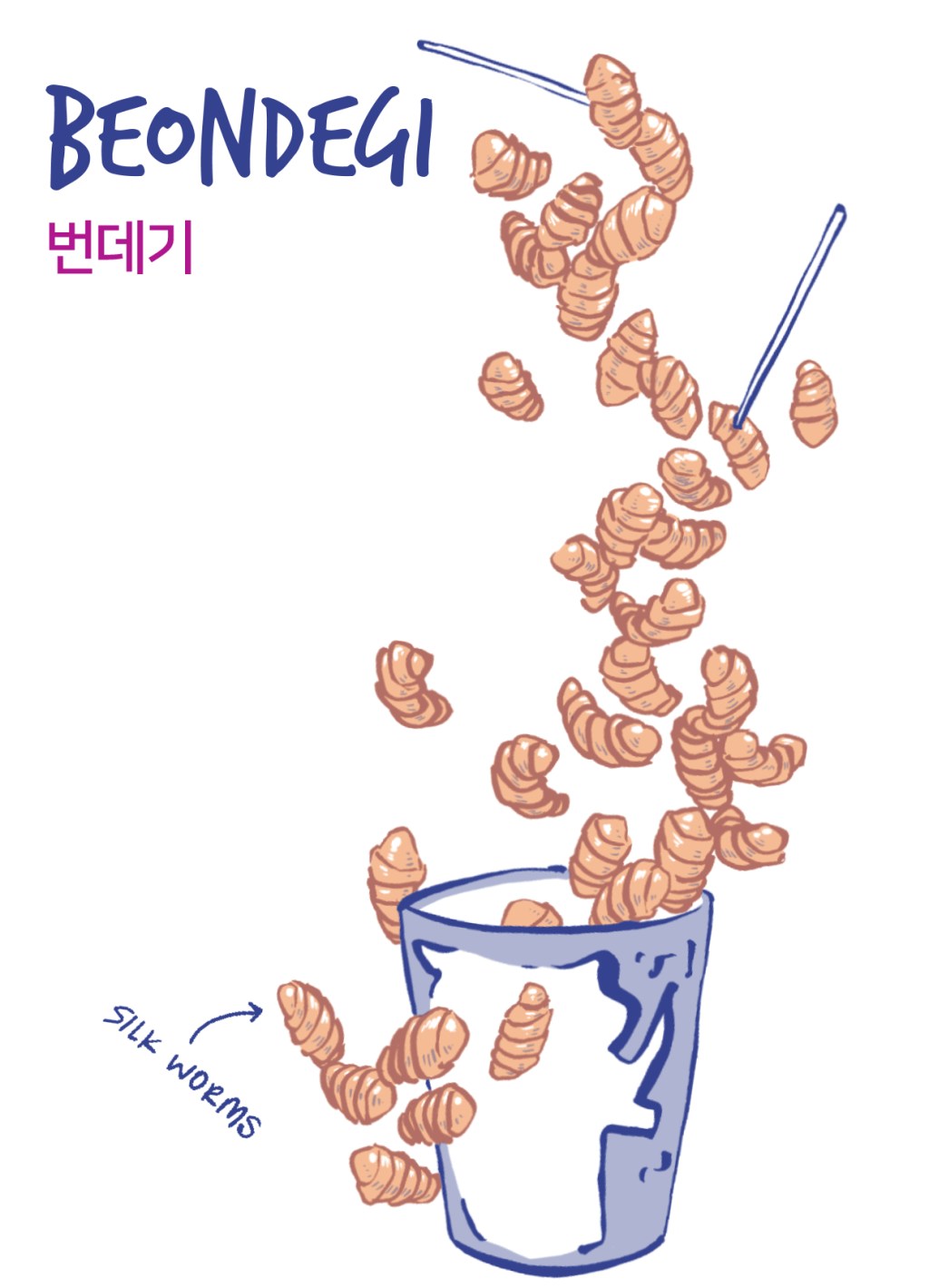
Beondegi, a unique and somewhat controversial delicacy in Korean cuisine, is a traditional snack that has both intrigued and challenged taste buds for generations. Also known as “silk worm pupae,” Beondegi is a popular street food in South Korea, particularly during the spring season when silk worms are abundant. Despite its unusual and adventurous nature, this snack holds a special place in Korean culinary culture, representing a connection to the country’s agricultural roots and a willingness to explore flavours beyond the conventional.
Beondegi’s history can be traced back centuries, where it originated as a nutritious source of protein and sustenance in rural areas. In the past, silk worms were an essential part of the silk production process, and after harvesting the silk, the remaining pupae were preserved and consumed as a valuable food source. Over time, what started as a practical necessity evolved into a beloved treat, captivating the taste buds of generations and becoming an integral part of Korean street food culture.
Preparing Beondegi is a meticulous process that requires attention to detail. The silk worm pupae are harvested, cleaned, and boiled to ensure their safety for consumption. Once cooked, they are seasoned with a combination of soy sauce, sugar, and salt, infusing them with a savoury and slightly sweet flavour profile. The seasoning also helps to mask any residual earthy taste from the pupae, making the dish more palatable for adventurous eaters.
The texture of Beondegi is a defining characteristic that can be both intriguing and challenging. The silk worm pupae have a soft and chewy texture, slightly reminiscent of edamame or boiled peanuts. The unique mouthfeel, coupled with the seasoning, creates a snack that is both satisfying and flavourful, though it may take some getting used to for those unfamiliar with this particular culinary adventure.
While Beondegi is beloved by many, it is also a snack that elicits strong reactions and polarized opinions. Some consider it a nostalgic comfort food, evoking memories of childhood or days spent wandering through bustling Korean markets. For others, the idea of consuming silk worm pupae can be daunting, and they might shy away from trying it due to cultural unfamiliarity or personal preferences.
Despite the divided opinions, Beondegi remains an important cultural symbol, and its popularity endures, especially during springtime festivals and outdoor gatherings. The snack is typically served in small paper cups, making it convenient for on-the-go consumption. Vendors selling Beondegi can be found at street food markets, train stations, and other public places, adding to the lively and diverse culinary landscape of South Korea.
In recent years, Beondegi has even garnered international attention, becoming a food challenge for adventurous eaters seeking to explore unfamiliar tastes from around the world. As Korean cuisine gains popularity globally, the appeal of Beondegi as an exotic delicacy has grown, attracting curious food enthusiasts who are eager to try new and unique culinary experiences.
In conclusion, Beondegi stands as a fascinating and iconic snack in Korean culinary culture, challenging preconceived notions about food and offering a glimpse into the country’s rich and diverse gastronomic heritage. While the idea of consuming silk worm pupae might be daunting for some, Beondegi holds a special place in the hearts of many Koreans, representing a connection to their agricultural past and a willingness to embrace culinary traditions that have stood the test of time. Whether you approach Beondegi with curiosity or caution, its presence in Korean street food culture is a testament to the nation’s adventurous spirit and its celebration of diverse flavours.
To learn more about Beondegi and other delicious Korean foods then you can read all about them in my Korean Floaty Food Guide here
 Nathan Hillustration