
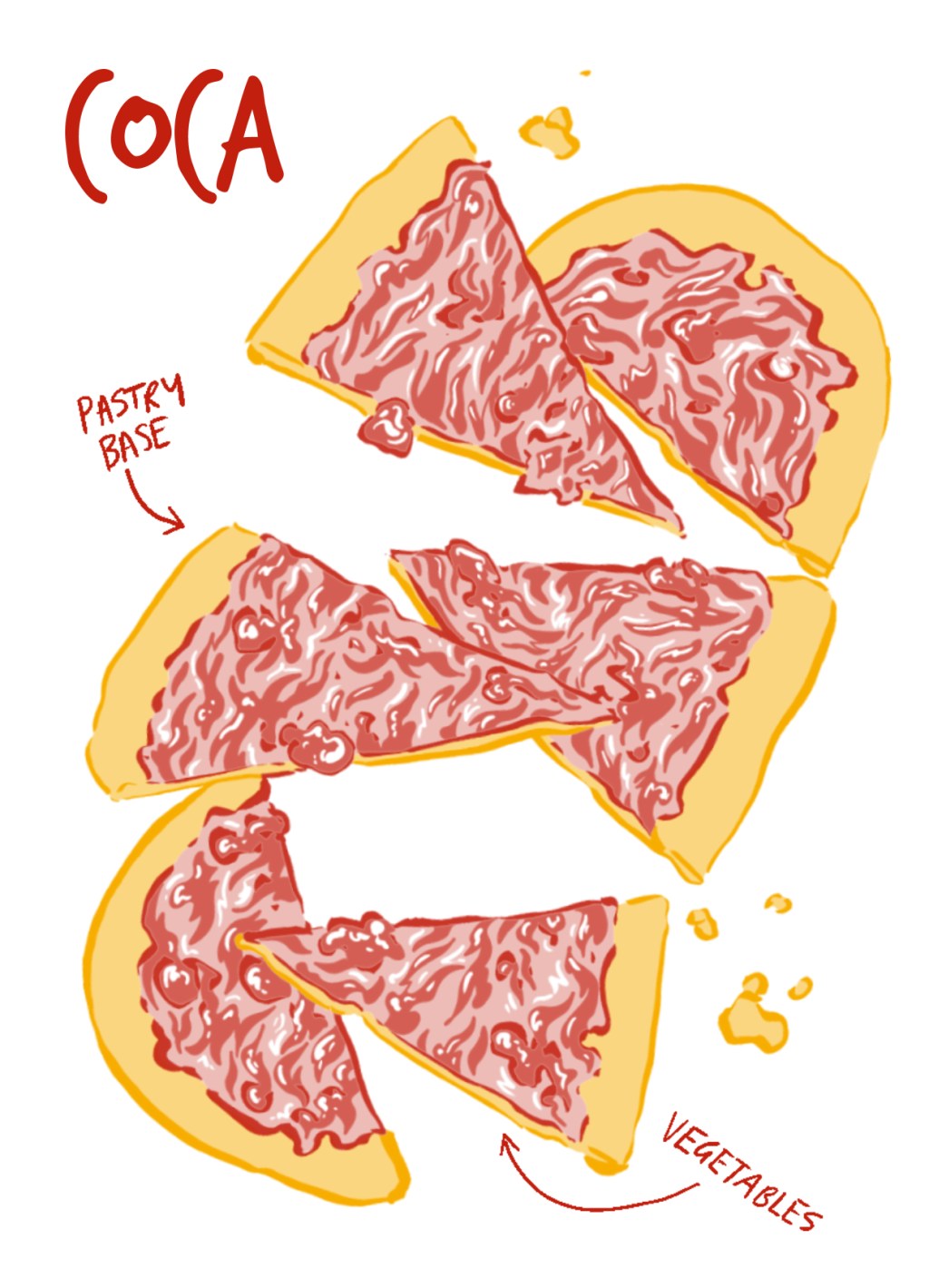
Coca, a versatile and beloved culinary delight, has a long and fascinating history that spans multiple cultures and regions. Originally hailing from the Mediterranean basin, coca is a type of savoury or sweet flatbread that has evolved and adapted over centuries, reflecting the rich diversity of the lands it has graced. Its name is thought to derive from the Latin “coquere,” meaning “to cook” or “to bake,” a nod to its method of preparation.
In its simplest form, coca is a yeasted dough that is rolled out into a thin, rectangular shape and then topped with a variety of ingredients. The toppings can range from savoury combinations like tomatoes, onions, olives, and various cheeses to sweet variations featuring fruits, nuts, sugar, and spices. This versatile canvas allows coca to be an appetizer, main course, or dessert, making it an indispensable part of Mediterranean cuisine.
Coca’s origins can be traced back to ancient times, with early records indicating that it was already enjoyed by the Greeks and Romans. However, its true popularity flourished during the Middle Ages in the region of Catalonia, in present-day Spain. Catalan coca became a staple in the region’s culinary repertoire, served during religious and social gatherings, and enjoyed by people of all walks of life.
Throughout its history, coca has continuously evolved, reflecting the influence of different cultures and traditions. In Catalonia, for example, coca is celebrated during the feast of Sant Joan (Saint John), where it is often topped with candied fruits and pine nuts to mark the arrival of summer. In the Balearic Islands, “coca de patata” is a popular sweet coca made with potatoes, sugar, and lard, resulting in a delightful and tender crumb.
In Valencia, coca takes on a unique identity, with the celebrated “coca de tonyina” featuring tuna, onions, and red peppers, and “coca d’oli,” a simple yet delicious version drizzled with olive oil and sprinkled with sugar.
Beyond Spain, coca has found its way into the culinary traditions of various other countries. In Italy, “pizza bianca” shares similarities with coca, with a simple dough topped with olive oil, salt, and rosemary. In the French region of Languedoc, “fougasse” bears a resemblance to coca, often featuring olives, cheese, and herbs. In Argentina and Uruguay, “fainá” is a popular chickpea-based flatbread that is reminiscent of coca, serving as a delightful accompaniment to pizza.
Coca’s adaptability is further demonstrated by its journey across the Atlantic during the age of exploration. Spanish settlers brought their culinary traditions to the New World, where coca evolved and fused with local ingredients, giving rise to unique variations. In Latin America, coca is enjoyed in various forms, such as “coca de jamón y queso” in Chile, a savoury delight with ham and cheese toppings, and “coca de camarones” in Colombia, featuring shrimp and creamy sauces.
In contemporary times, coca has also found a place in the world of haute cuisine. Renowned chefs have embraced the traditional flatbread, elevating it with innovative and artistic presentations, using high-quality ingredients and creative pairings. Coca has been reimagined as a canvas for culinary exploration, a testament to its enduring appeal and potential for reinvention.
In conclusion, coca is far more than a simple flatbread; it is a culinary journey through time and space, a delicious testament to the blending of cultures and the art of adaptation. Its versatility and adaptability have allowed it to transcend borders and become a beloved part of various culinary traditions worldwide. From its humble beginnings in the Mediterranean to its status as a culinary canvas for modern gastronomy, coca continues to captivate taste buds and evoke the spirit of exploration, reminding us that food is not only nourishment but also a delightful expression of cultural exchange and creativity.
To learn more about Coca and other delicious Spanish foods then you can read all about them in my Spanish Floaty Food Guide here
 Nathan Hillustration