
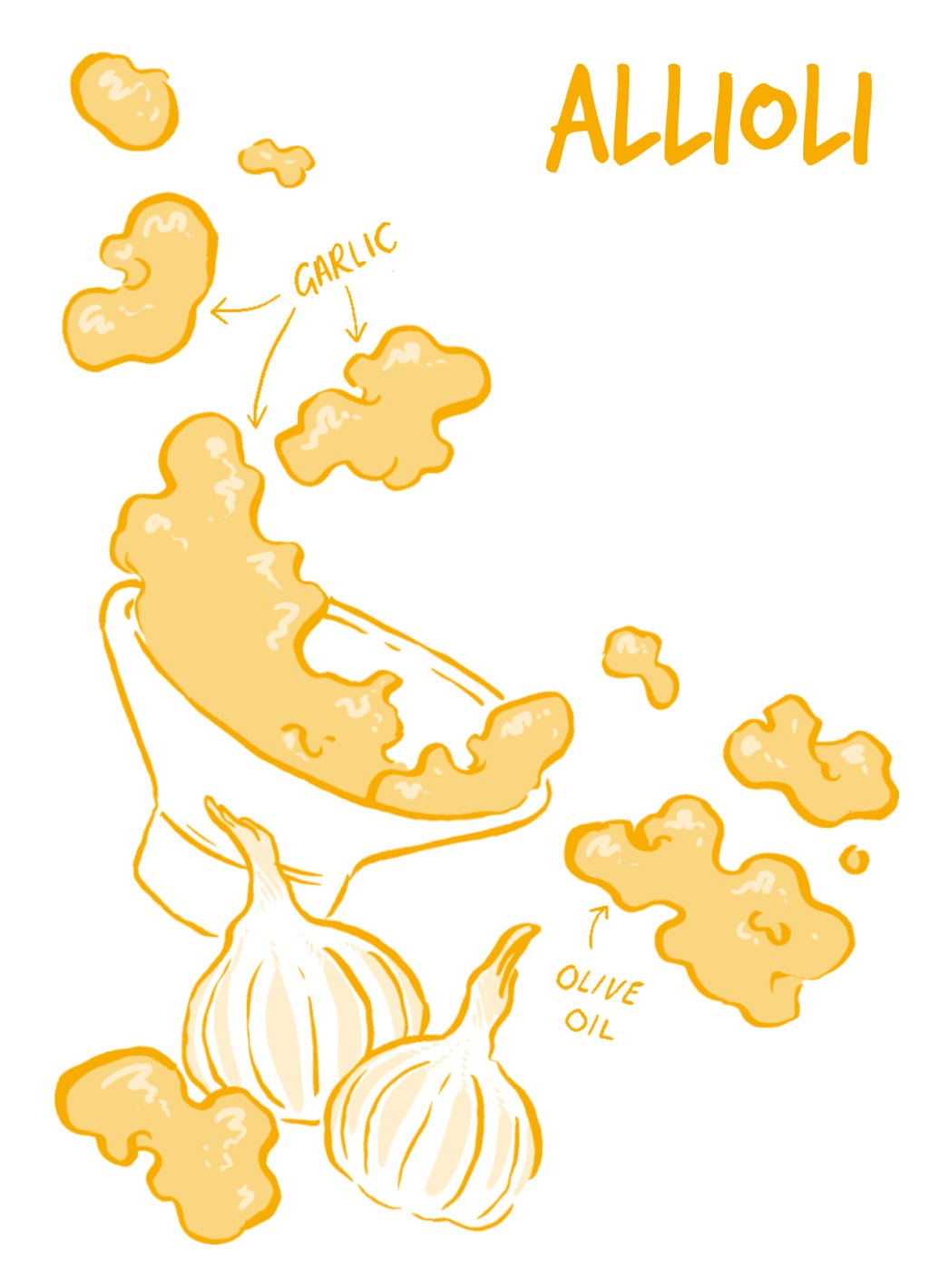
Allioli, also known as aioli, is a delectable and flavourful Mediterranean sauce that has been celebrated for centuries. With its origins deeply rooted in the culinary traditions of Spain, particularly in Catalonia and the Balearic Islands, allioli has grown to become a cherished condiment across various regions and cuisines. The name “allioli” itself is derived from the Catalan words “all” (garlic) and “oli” (oil), which beautifully encapsulates the essence of this remarkable sauce.
At its core, allioli is a simple yet versatile emulsion, traditionally made by pounding garlic and salt together in a mortar until it forms a smooth paste. Then, a generous amount of high-quality extra virgin olive oil is gradually added while continuously stirring to create a thick and creamy texture. In some variations, egg yolk may be incorporated as an emulsifying agent, lending a more stable consistency to the sauce. The result is a magical concoction that boasts a pungent aroma, a rich garlic flavour, and a silky mouthfeel that elevates any dish it graces.
The history of allioli can be traced back to the early Roman era, where a similar sauce called “garum” was popularized. Garum was made by fermenting fish intestines, salt, and other seasonings, and it served as an essential condiment in the ancient Roman cuisine. As time passed, the recipe for garum evolved, and the fish-based sauce gradually gave way to the modern garlic and oil-based version known as allioli.
Throughout the centuries, allioli has undergone various regional adaptations and interpretations, further enriching its culinary significance. In Catalonia, where allioli holds a particularly special place in the local culture, it is traditionally served with a wide array of dishes, including paella, grilled meats, vegetables, and seafood. The locals take great pride in their allioli-making skills, often turning it into a social event where families and friends gather around the mortar and pestle, creating bonds over the age-old culinary art.
Beyond Spain, allioli has found its way into the hearts and palates of food enthusiasts worldwide. Chefs and home cooks alike have embraced this savoury delight, incorporating it into their creations to enhance and enliven the flavours of countless dishes. From being a humble accompaniment to becoming a prominent ingredient in various recipes, allioli has indeed transcended borders, bringing joy to a global audience.
As allioli continues to gain popularity, it has also undergone contemporary twists to cater to modern tastes and dietary preferences. Some inventive versions include roasted garlic allioli, which imparts a milder and sweeter flavour, and the incorporation of different spices and herbs to add a unique twist. Vegan variations have emerged as well, replacing the egg yolk with plant-based alternatives to accommodate those with dietary restrictions.
Despite its simplicity, making authentic allioli requires a certain finesse and patience. The gradual incorporation of oil demands a steady hand and perseverance, as any abrupt movements could result in a broken emulsion. This delicate process has even become a rite of passage for aspiring cooks, a test of their dedication to the culinary arts.
In conclusion, allioli is far more than just a sauce; it embodies the rich history, culture, and passion of the Mediterranean region. Its time-honoured preparation and unforgettable taste have withstood the test of time and continue to captivate palates worldwide. Whether served traditionally with rustic dishes or adapted to suit modern gastronomic trends, allioli remains a beloved condiment that brings people together over the shared joy of food. Its legacy endures as an enduring symbol of the culinary traditions and artistry that have shaped our world.
To learn more about Allioli and other delicious Spanish foods then you can read all about them in my Spanish Floaty Food Guide here
 Nathan Hillustration