
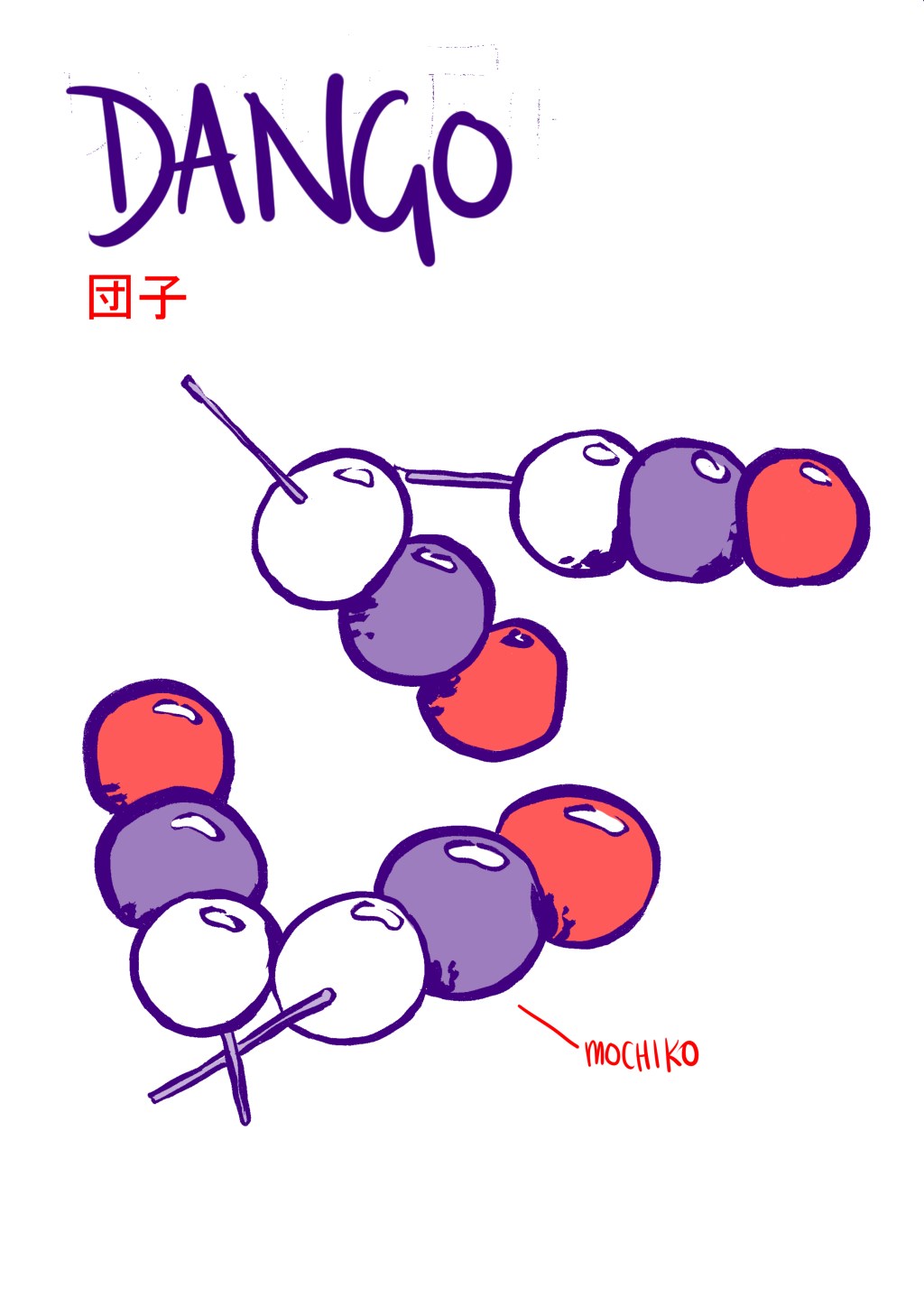
Dango is a traditional Japanese sweet made from mochiko (sweet rice flour) and often served skewered on a stick. It’s a simple and versatile treat that can be enjoyed in many different ways, and has a long history in Japanese culture and cuisine.
The origins of dango can be traced back to the Heian period (794-1185), when it was primarily consumed by the upper class as a luxury food. However, as time passed, dango became more widely available and is now enjoyed by people of all classes. Dango is also often associated with festivals and ceremonies, and is a common treat during the cherry blossom season, or “Hanami” in Japan.
Dango is made by mixing mochiko with water to form a dough, which is then formed into small balls and steamed. The dango is then skewered on a stick and can be enjoyed plain, or with a variety of toppings such as sweet soy sauce, kinako (roasted soybean flour), or anko (sweet red bean paste).
One of the most popular variations of dango is “Mitarashi Dango” which is dango that is coated with a sweet soy sauce glaze and often served with green tea. Another popular variation is “Yaki Dango” which is grilled dango that is often coated with a sweet soy sauce glaze and then grilled until it has a slightly crispy texture.
Dango can also be enjoyed in a sweet soup called “dango jiru” which is made with a sweet broth, dango, and sometimes with added ingredients such as chestnuts or sweet potato.
Another popular variation of dango is “Niku Dango” which is dango that is filled with sweet meat filling, usually made of sweetened red bean paste.
Dango is a popular treat in Japan and can be found in many convenience stores, supermarkets, and traditional sweet shops called “mochitsuki” where it is made fresh on-site. It can also be made at home, and is a fun activity to make with kids or friends.
In addition to being a delicious treat, dango also has cultural significance. The three dango skewers often represent the three virtues of Confucianism: filial piety, fraternity, and loyalty. The three dango balls on a skewer also symbolizes the past, present, and future.
In conclusion, Dango is a traditional Japanese sweet that has a long history and cultural significance in Japan. It is a versatile treat that can be enjoyed in many different ways and can be found easily in Japan. It’s a must-try for anyone visiting Japan or for those looking to try something new and delicious.
To learn more about Dango and other delicious Japanese foods then you can read all about them in my Japanese Floaty Food Guide here
 Nathan Hillustration