
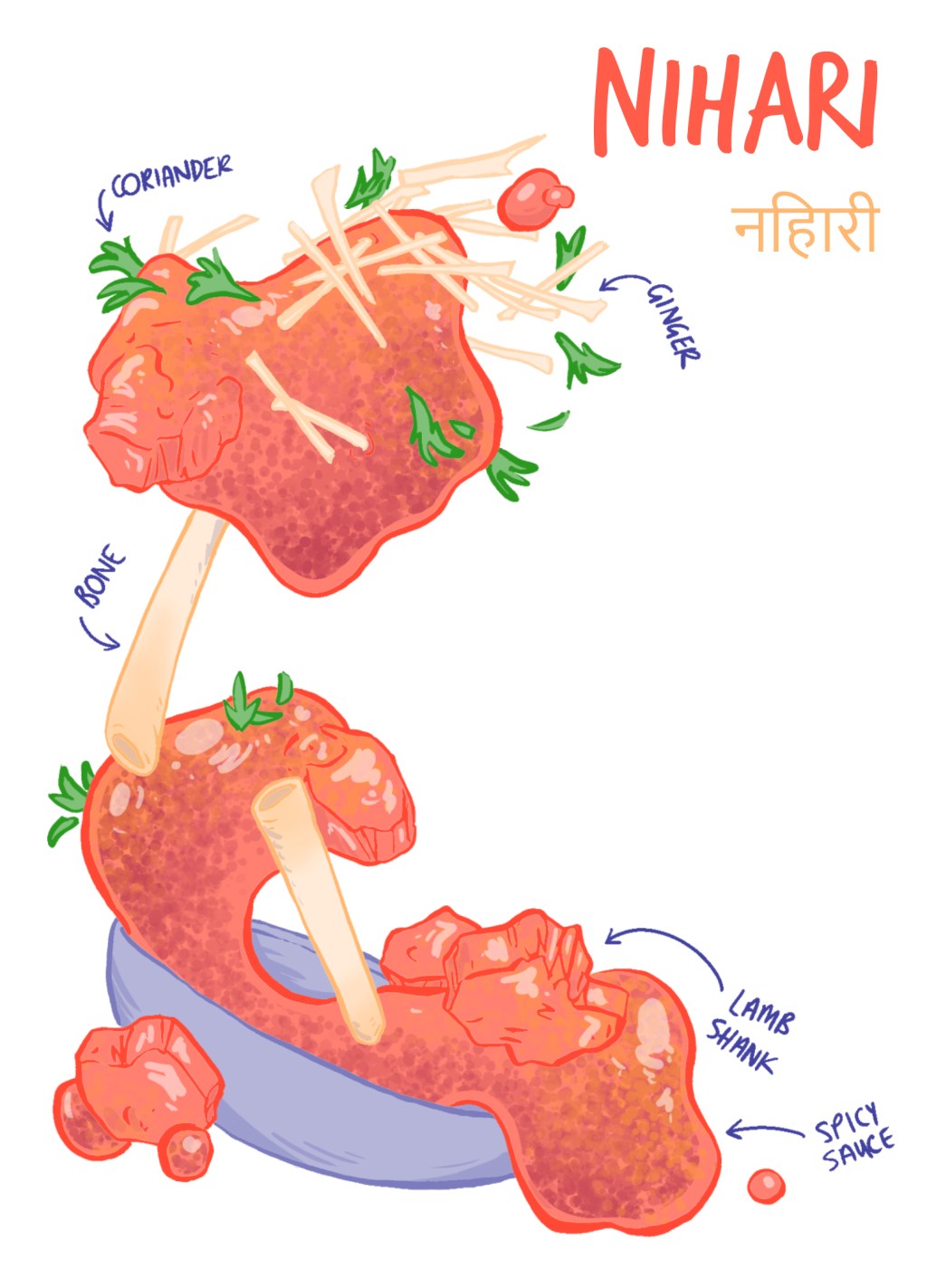
Nihari, a flavoursome and rich stew hailing from the culinary heart of India, is a culinary gem that reflects the essence of slow-cooked and aromatic dishes in Mughlai cuisine. This beloved delicacy is not just a meal; it is a cultural icon that embodies the grandeur of Indian royal kitchens and the art of blending spices to create a symphony of flavours.
At the heart of Nihari is tender and succulent pieces of meat, often lamb or beef shank, slow-cooked to perfection in a fragrant broth. The meat is simmered with a blend of aromatic spices like cinnamon, cloves, cardamom, and bay leaves, along with ground spices such as coriander, cumin, and fennel. The secret to Nihari’s distinctive flavour lies in the process of slow-cooking the meat on low heat for several hours, allowing the flavours to meld together and the meat to become tender and infused with the spices.
The word “Nihari” itself is believed to have originated from the Arabic word “Nahar,” meaning “morning,” as it was traditionally served as a hearty breakfast for the Mughal royalty after their morning prayers. Over time, Nihari has become a beloved dish that is enjoyed as a special treat during festive occasions and family gatherings.
Nihari is often served with naan or paratha, which are perfect accompaniments for soaking up the flavourful gravy. The dish is garnished with fresh cilantro, sliced green chilies, and a splash of lemon juice, adding a burst of freshness and tanginess to the rich and aromatic stew.
Beyond its popularity in royal kitchens, Nihari has found admirers among food enthusiasts from all walks of life. Today, it is a favourite dish in many restaurants and eateries across India, where chefs and home cooks alike take pride in their unique recipes and techniques for making this classic stew.
The preparation of Nihari is a labor of love and an art form in itself. Many families have their cherished recipes and techniques for making Nihari, passed down through generations. The process of slow-cooking the meat and blending the spices requires patience and precision, creating a dish that is not only rich in flavour but also steeped in tradition and culinary excellence.
In addition to its taste and cultural significance, Nihari is also a symbol of community and togetherness. It is common for families and friends to come together to enjoy Nihari during special occasions and festivals, creating lasting memories and a sense of celebration.
In conclusion, Nihari is a culinary gem that celebrates the art of slow-cooking and the richness of Mughlai cuisine. Its tender and succulent meat, infused with a symphony of aromatic spices, creates a delightful and satisfying stew experience. Whether enjoyed as a breakfast treat in royal kitchens or savoured in restaurants and homes across India, Nihari continues to enthrall food enthusiasts with its exquisite taste and remains a beloved favourite among those who cherish the magic of well-crafted and time-honored dishes.
To learn more about Nihari and other delicious Indian foods then you can read all about them in my Indian Floaty Food Guide here
 Nathan Hillustration