
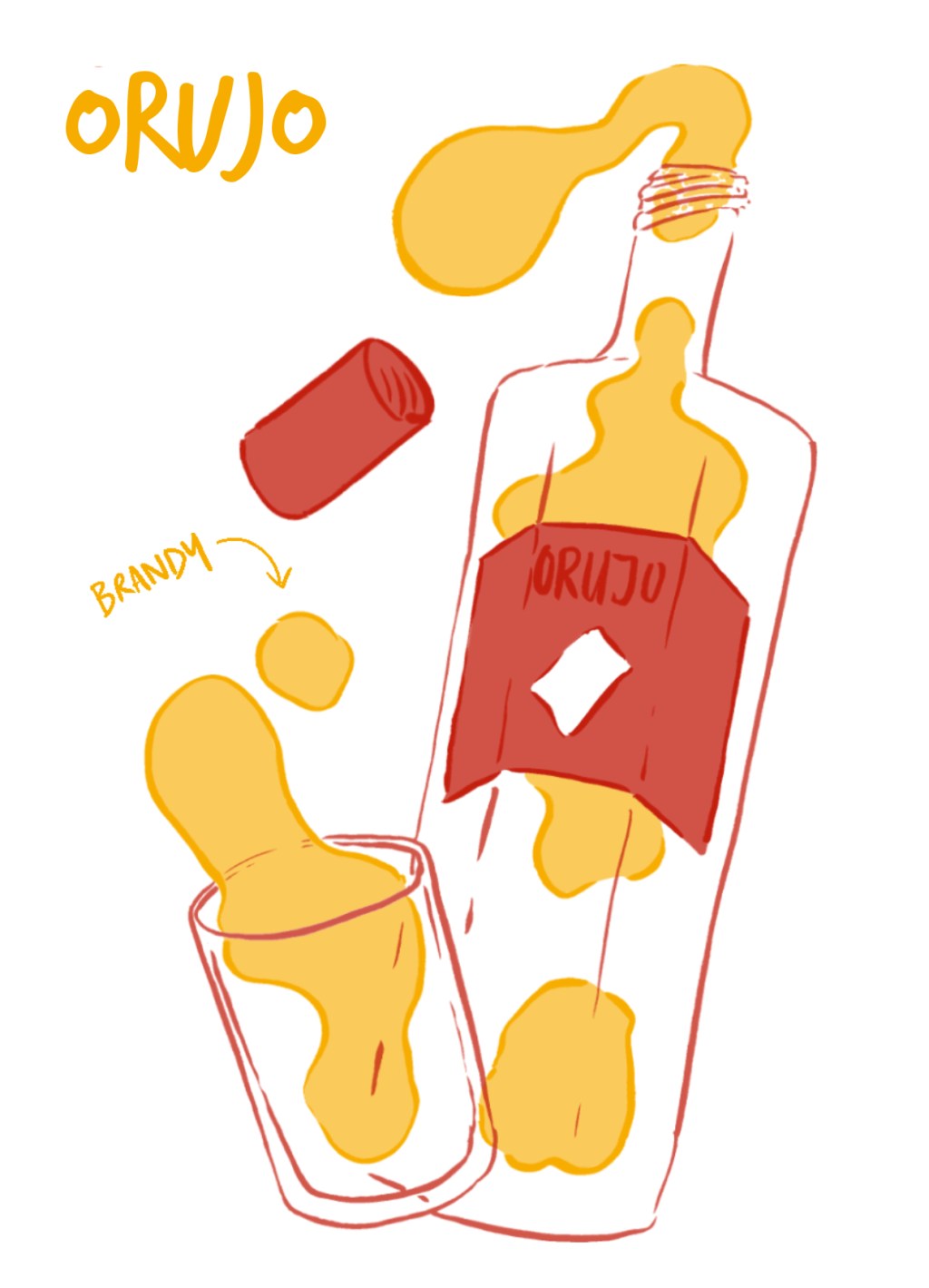
Orujo, a potent and traditional spirit from the northern regions of Spain, is a distilled liquor that holds a special place in the hearts and culture of the country. Named after the solid remains of grape skins and seeds left after the wine-making process, orujo is deeply rooted in the centuries-old tradition of viticulture in regions like Galicia, Asturias, and Cantabria. The process of making orujo begins with the grape marc, which is collected after pressing the grapes to extract their juice for winemaking. This residual material is then fermented and distilled, resulting in a strong and flavourful spirit that reflects the essence of the land and the expertise of local distillers.
Orujo’s history can be traced back to ancient times when the people of these northern regions discovered the art of distillation, allowing them to make use of every part of the grape in their winemaking process. The distillation of orujo was not only a practical solution for waste reduction but also a way to create a beverage that celebrated the flavours of the region’s diverse grape varieties.
The production of orujo is governed by strict regulations to ensure its quality and authenticity. The grape marc is typically fermented in stainless steel vats, allowing for a controlled and consistent fermentation process. After fermentation, the liquid is distilled using copper stills, a traditional method that imparts a smooth and refined character to the spirit. The first distillation results in a spirit known as “aguardiente,” which has a high alcohol content and a potent taste. To obtain orujo, a second distillation is performed, further refining the spirit and adding complexity to its flavour profile.
Orujo is known for its versatility and can be enjoyed in various ways. Some prefer to savour it neat or slightly chilled to experience its full-bodied taste and aromatic notes. Others enjoy orujo as an ingredient in cocktails or mixed with coffee, creating popular drinks like “carajillo” or “queimada,” a traditional Galician ritual where orujo is set on fire with sugar, coffee beans, and spices, creating a dramatic and flavourful display.
Beyond its role as a beverage, orujo holds cultural significance and is an essential part of the social fabric in northern Spain. In Galicia, orujo is celebrated during the “Fiesta del Orujo” held in the town of Potes, where locals and visitors come together to enjoy the spirit’s flavours, dance to traditional music, and celebrate the region’s rich cultural heritage.
Orujo’s reputation has extended beyond Spain’s borders, attracting interest and appreciation from international consumers and spirits enthusiasts. Its distinctive character and unique production process have made it a sought-after spirit among connoisseurs, who relish its authentic taste and connection to the Spanish countryside.
In conclusion, orujo is a cherished and traditional spirit that reflects the rich heritage and cultural significance of the northern regions of Spain. Its roots in the ancient art of distillation and its connection to the grape-growing traditions of Galicia, Asturias, and Cantabria make it a spirit that embodies the essence of the land and the expertise of local distillers. Whether sipped neat, enjoyed in a cocktail, or partaken in traditional rituals, orujo continues to hold a special place in the hearts and glasses of those who appreciate its robust flavour and cultural significance. As orujo remains an enduring symbol of the traditions and craftsmanship of Spanish spirits, it stands as a testament to the power of time-honoured practices and the delight of raising a glass to celebrate life’s moments.
To learn more about Orujo and other delicious Spanish foods then you can read all about them in my Spanish Floaty Food Guide here
 Nathan Hillustration