
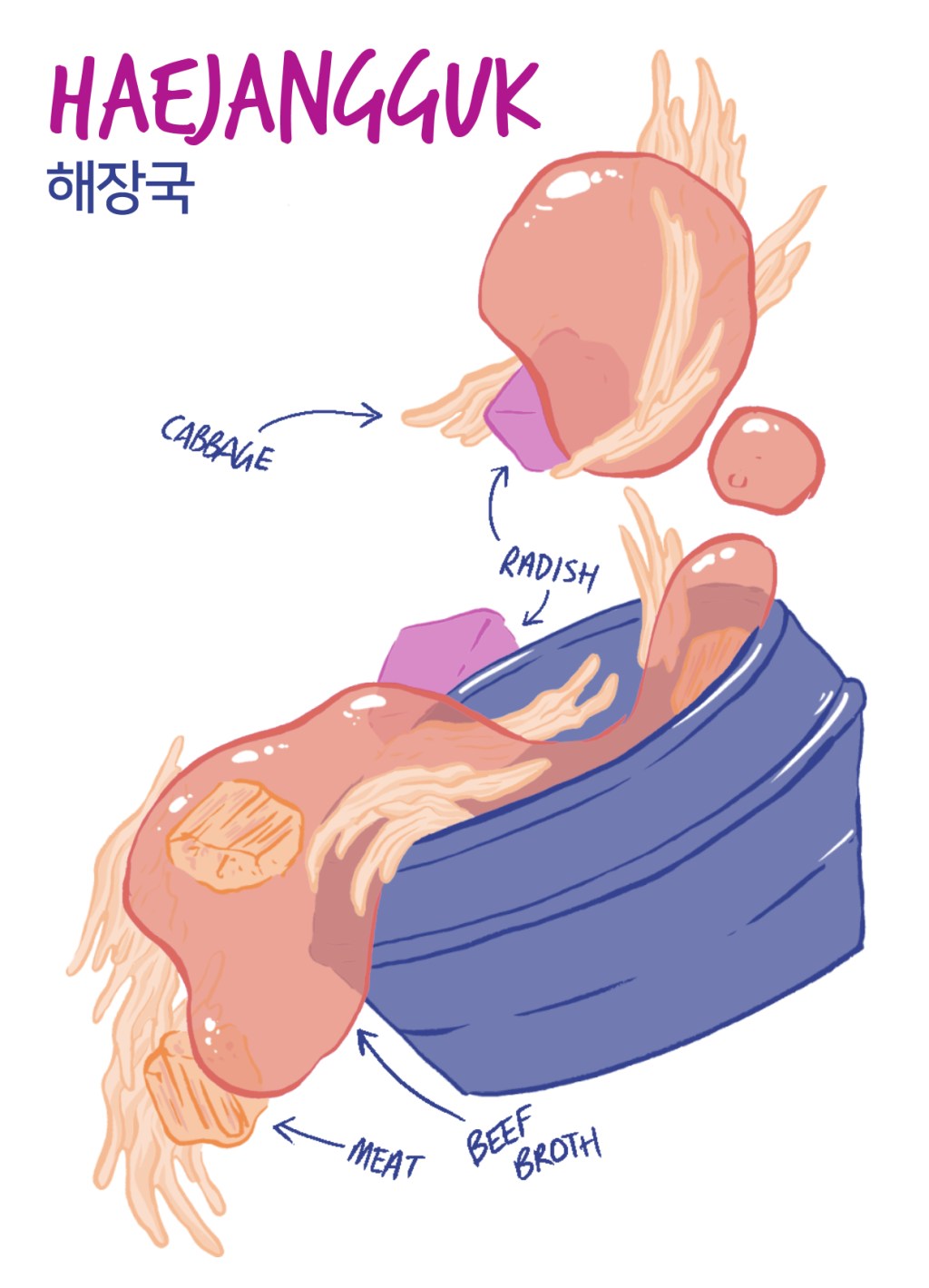
Haejangguk, a cherished and time-honoured Korean dish, is a soul-nourishing remedy that has been soothing the effects of a night of revelry for generations. Translating to “hangover soup,” haejangguk is a hearty and comforting stew known for its revitalizing properties and ability to cure the woes of a lively evening of drinking. In Korea, where social drinking is an integral part of the culture, haejangguk has become an essential culinary tradition that offers comfort, warmth, and relief after a night of indulgence.
At the heart of haejangguk lies a flavourful and robust broth, carefully crafted to aid in hangover recovery. The base of the broth typically consists of beef or pork bones, simmered for hours to extract their rich essence and nutrients. This slow and gentle cooking process infuses the broth with deep flavours, as well as gelatin and collagen, which are believed to have restorative properties for the body.
The choice of meat in haejangguk may vary, but it often includes cuts of beef or pork, providing additional protein and enhancing the overall taste. These meats are tender and succulent, having been simmered in the broth until they are infused with the savoury flavours of the soup.
The array of vegetables and herbs in haejangguk further enriches the dish, providing a wholesome and nourishing combination of flavours. Common vegetables include napa cabbage, radish, green onions, and garlic, each contributing to the complexity of taste and the nutritional benefits of the soup.
A distinctive ingredient in haejangguk is congealed ox blood, known as “gyeongdan.” This unique addition is said to be especially effective in reviving the body after excessive drinking, and it adds a rich, iron-rich taste to the stew.
The seasoning of haejangguk is essential, as it determines the balance of flavours and the overall effectiveness of the soup in combating a hangover. The broth is typically seasoned with a combination of soy sauce, red pepper flakes, and various spices, creating a harmonious blend of umami and spiciness that is both comforting and invigorating.
The serving of haejangguk is an experience in itself, as the steaming bowl of soup arrives accompanied by an array of condiments and side dishes. Common accompaniments include kimchi, various types of pickles, and rice or rice cakes. These additions not only enhance the taste of the soup but also provide a source of carbohydrates to further aid in hangover recovery.
Beyond its hangover-curing properties, haejangguk is also enjoyed as a hearty and satisfying meal during colder months or whenever comfort and warmth are desired. It is a cherished tradition that brings friends and family together, as people gather around a steaming pot of haejangguk to share stories and laughter while enjoying the nourishing stew.
Internationally, haejangguk has gained recognition as Korean cuisine gains popularity worldwide. Korean restaurants and food enthusiasts proudly serve this revitalizing soup, introducing people from diverse backgrounds to the unique flavours and cultural significance of haejangguk. As diners savour the rich and comforting broth, they gain a deeper appreciation for Korean culinary traditions and the thoughtful balance of flavours in this time-honoured hangover remedy.
Moreover, haejangguk’s nutritional benefits contribute to its popularity as a hearty and satisfying dish. The combination of meat, vegetables, and broth provides a balance of proteins, vitamins, and minerals, making haejangguk not only a delightful treat but also a nourishing addition to the dining table.
In conclusion, haejangguk is far more than just hangover soup; it is a celebration of Korean culinary ingenuity and the power of comfort food. Its flavourful and revitalizing broth, infused with the goodness of meat and vegetables, creates a culinary symphony that soothes the body and warms the soul. Whether enjoyed as a remedy after a night of celebration or as a comforting meal with loved ones, haejangguk embodies the essence of Korean cuisine—a celebration of flavours, traditions, and the joy of shared meals. As diners savour the hearty and revitalizing delights of haejangguk, they partake in a timeless story—a story of culinary comfort, togetherness, and the enduring spirit of Korean cuisine.
To learn more about Haejangguk and other delicious Korean foods then you can read all about them in my Korean Floaty Food Guide here
 Nathan Hillustration