
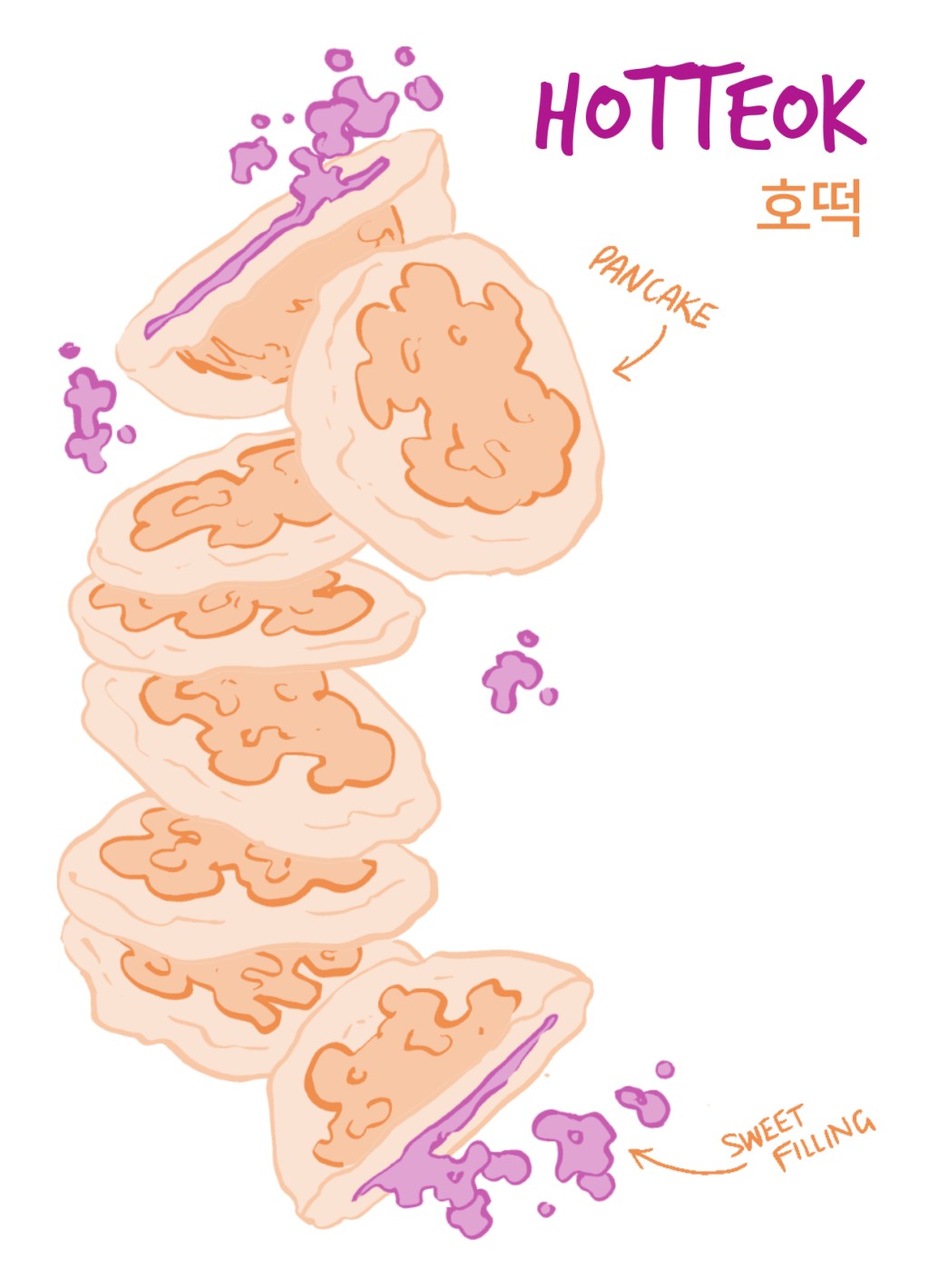
Hotteok, a popular Korean street food and beloved winter treat, is a delectable and indulgent pancake filled with a sweet and savoury mixture. Translating to “hotteok” literally means “fire cake,” which alludes to the traditional method of cooking this delightful snack over an open flame. With its crispy exterior and gooey, flavourful filling, hotteok has captured the hearts and taste buds of Koreans and visitors alike, making it an iconic symbol of Korean street food culture.
At the heart of hotteok lies the pancake dough, which is made from a mixture of wheat flour, water, milk, sugar, and yeast. The dough is kneaded until it becomes soft and elastic, then left to rise to achieve the perfect texture. The dough is then divided into individual portions and flattened to create a pocket for the filling.
The filling is the highlight of hotteok, and it can vary to suit different tastes. A classic and widely loved filling is a combination of brown sugar, cinnamon, and chopped peanuts. The sugar melts during cooking, creating a gooey and caramel-like sweetness, while the cinnamon adds warmth and fragrance. The crunchy peanuts provide a delightful contrast of textures.
To assemble the hotteok, the filling is placed in the centre of the flattened dough, and the edges are carefully sealed to enclose the delicious mixture. The filled dough is then flattened again to create a round and slightly flat pancake shape, ready for cooking.
Traditionally, hotteok is cooked on a greased griddle or pan over an open flame. The pancake is cooked until it becomes golden brown and crispy on the outside, while the filling inside turns soft and molten. The sizzling sound of the hotteok as it cooks is a familiar and inviting sound on the bustling streets of Korea.
Hotteok is best enjoyed fresh and hot, straight from the griddle. It is typically served in a paper cup or a small paper wrapper to catch any drips from the delicious filling. The first bite of hotteok is a moment of bliss, as the crispy exterior gives way to the warm, sweet, and nutty filling, creating a burst of flavours and textures that is simply irresistible.
The popularity of hotteok extends beyond Korea, as this delectable snack has gained recognition and love from food enthusiasts around the world. Korean restaurants, food festivals, and street food markets proudly offer hotteok, introducing people from diverse backgrounds to the delightful flavours and cultural significance of this iconic treat.
Hotteok’s appeal also lies in its adaptability, with modern variations incorporating different fillings to cater to varying tastes. In addition to the classic brown sugar and cinnamon filling, hotteok can be filled with chocolate, cheese, red bean paste, or even savoury ingredients like kimchi and vegetables, showcasing the creativity and versatility of Korean cuisine.
In conclusion, hotteok is far more than just a pancake; it is a celebration of Korean street food culture, creativity, and indulgence. Its crispy exterior, paired with the gooey sweetness of the filling, creates a culinary symphony that delights the senses and brings joy to the hearts of all who taste it. Whether enjoyed on a chilly winter day or as a comforting snack anytime, hotteok embodies the essence of Korean cuisine—a celebration of flavours, traditions, and the joy of savouring delightful treats. As food enthusiasts savour the delectable and indulgent delights of hotteok, they partake in a timeless story—a story of culinary craftsmanship, cultural pride, and the enduring warmth of traditional Korean street food.
To learn more about Hotteok and other delicious Korean foods then you can read all about them in my Korean Floaty Food Guide here
 Nathan Hillustration